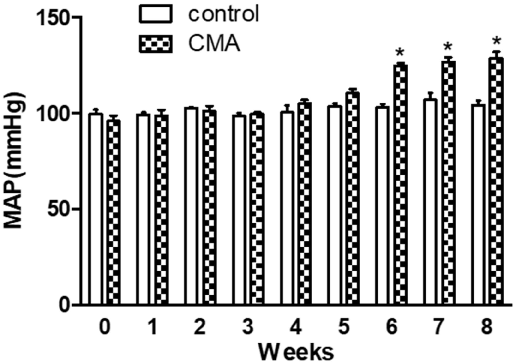
Description
Blood pressure measurements by tail-cuff method showing significant changes in mean arterial pressure across treatment groups. Chronic metabolic acidosis elicited a hypertensive response, supporting the hypothesis that sustained acid-base imbalance directly contributes to elevated blood pressure.
More Figures from This Paper
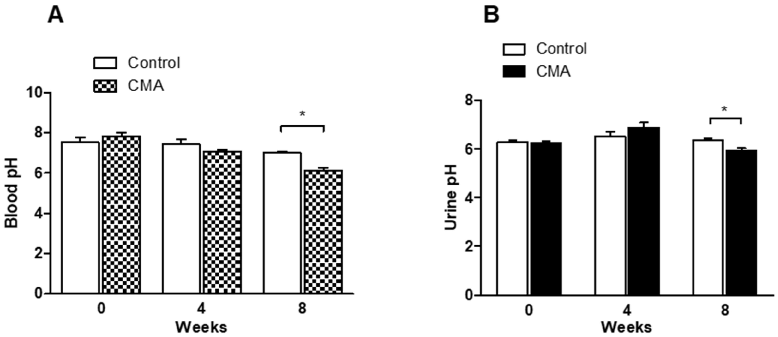
Figure 7
Renal tissue analysis or additional hemodynamic data from the chronic metabolic acidosis hypertension study. The intrarenal measurements help delineate the local versus systemic mechanisms driving the blood pressure response.
chart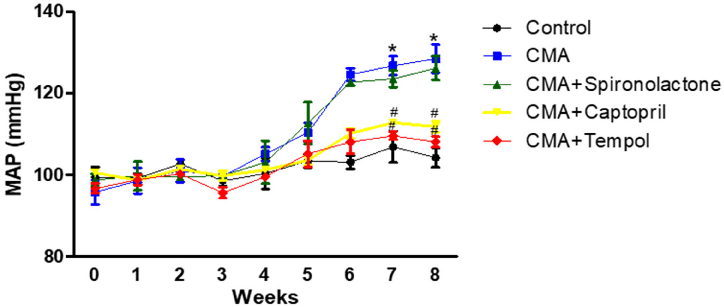
Figure 8
Molecular or biochemical analysis of kidney tissue from animals with chronic metabolic acidosis. The data examine expression of inducible nitric oxide synthase and angiotensin pathway components in the renal cortex.
chart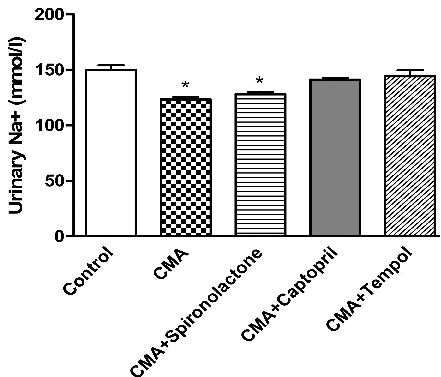
Figure 9
Urinary sodium excretion analysis across experimental groups reveals altered renal sodium handling during chronic metabolic acidosis. Changes in sodium reabsorption may contribute to the volume-dependent component of acidosis-induced hypertension.
chart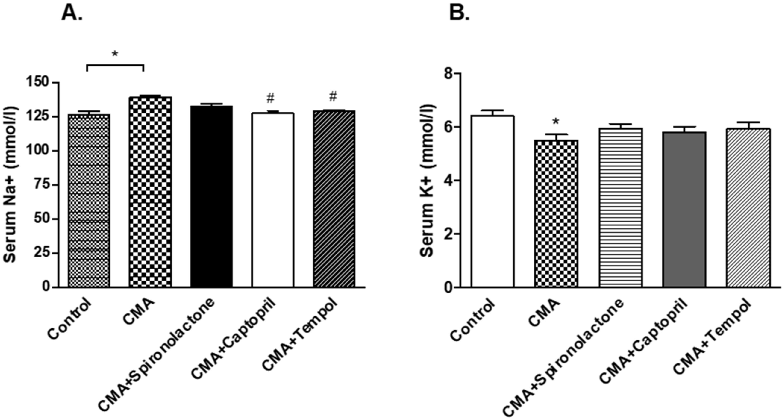
Figure 10
Serum sodium and potassium levels measured during chronic metabolic acidosis. Electrolyte imbalances, particularly in potassium homeostasis, are closely linked to both acid-base disturbances and blood pressure regulation through renal and vascular mechanisms.
chart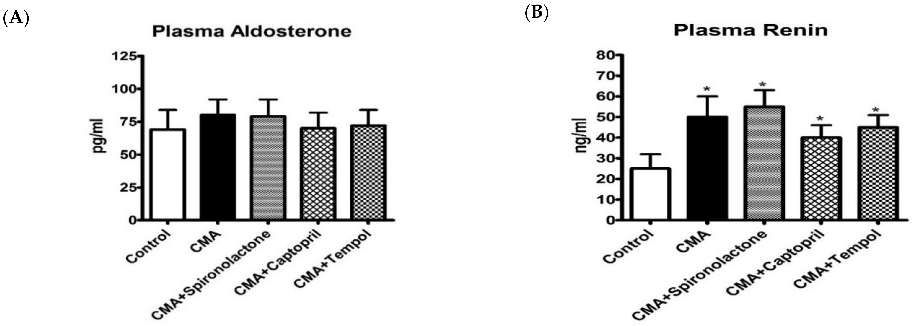
Figure 11
Plasma aldosterone and plasma renin measurements indicate activation of the systemic renin-angiotensin-aldosterone system during chronic metabolic acidosis. Elevated aldosterone levels suggest enhanced sodium retention and potassium excretion as contributors to the hypertensive phenotype.
chart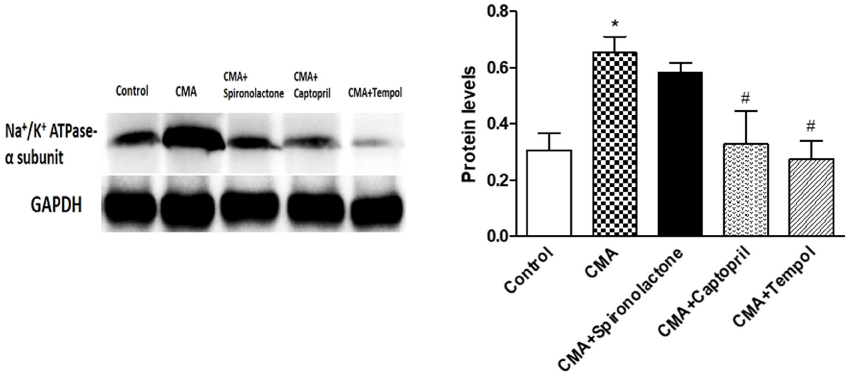
Figure 12
Figure 6
ChartSource Paper
Chronic Metabolic Acidosis Elicits Hypertension via Upregulation of Intrarenal Angiotensin II and Induction of Oxidative Stress.Cite This Figure
 > Source: Dinesh Aryal et al. "Chronic Metabolic Acidosis Elicits Hypertension via Upregulation of Intrarenal A." *Antioxidants (Basel, Switzerland)*, 2020. PMID: [33374943](https://pubmed.ncbi.nlm.nih.gov/33374943/)
<figure>
  <img src="https://pdfs.citedhealth.com/figures/33374943/108.png" alt="Blood pressure measurements by tail-cuff method showing significant changes in mean arterial pressure across treatment groups. Chronic metabolic acidosis elicited a hypertensive response, supporting the hypothesis that sustained acid-base imbalance directly contributes to elevated blood pressure." />
  <figcaption>Figure 6. Blood pressure measurements by tail-cuff method showing significant changes in mean arterial pressure across treatment groups. Chronic metabolic acidosis elicited a hypertensive response, supporting the hypothesis that sustained acid-base imbalance directly contributes to elevated blood pressure.<br>  Source: Dinesh Aryal et al. "Chronic Metabolic Acidosis Elicits Hypertension via Upregulation of Intrarenal A." <em>Antioxidants (Basel, Switzerland)</em>, 2020. PMID: <a href="https://pubmed.ncbi.nlm.nih.gov/33374943/">33374943</a></figcaption>
</figure>